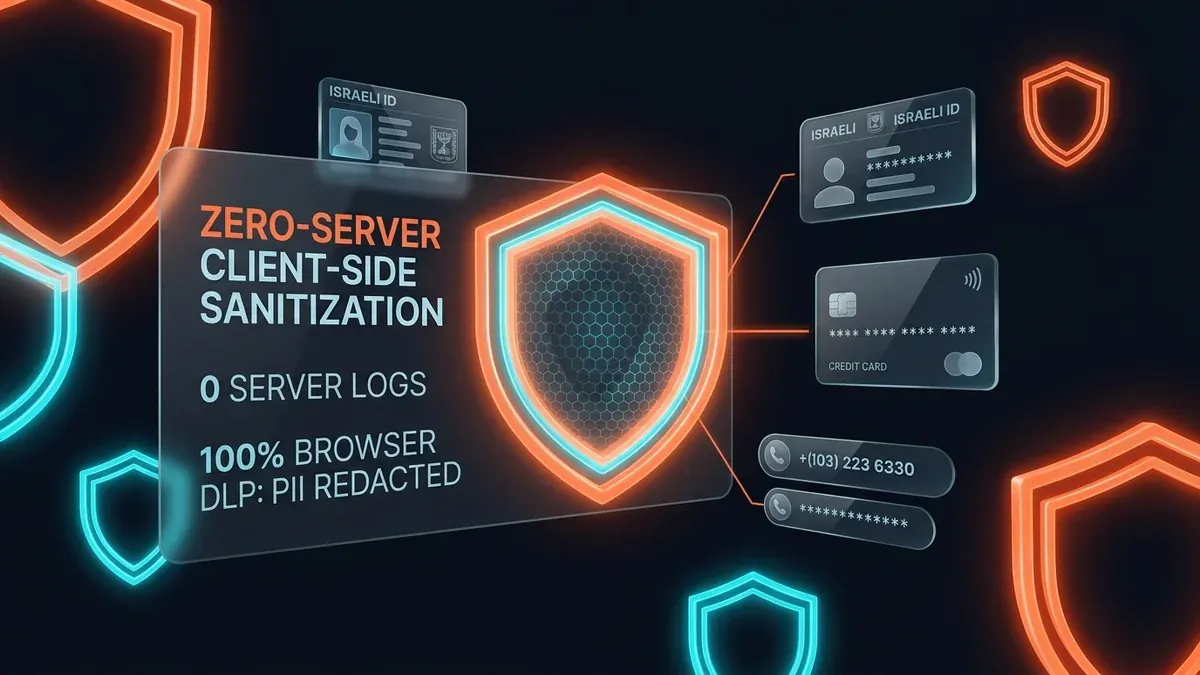
The Catastrophic Flaw in Intermediary Server-Side DLP#
The cybersecurity landscape has experienced severe supply-chain breaches, highlighted by the catastrophic LiteLLM proxy vulnerability that exposed terabytes of proprietary API keys and confidential payloads.
These incidents demonstrate an immutable architectural law: You cannot establish Zero Trust through an intermediary proxy server.
> Server-side DLP sanitizers (such as cloud proxy gateways) require transmitting raw, unmasked PII over the network to third-party servers before redaction occurs. If that proxy server is compromised or intercepted, every confidential prompt is harvested.
Why 100% Client-Side Sanitization is the Only Immune Architecture#
- 1Zero Outgoing Packets: Privacy Scrubber executes all 20+ machine learning and heuristic entity detection models entirely inside volatile browser RAM or local developer MCP servers.
- 2Reversible Local Tokenization: Confidential parameters are masked as synthetic tokens (e.g.
[CLIENT_ID_1]) before transmission. The local session restores original values seamlessly upon receiving the AI response. - 3Regulatory Immunity: Zero bytes of unmasked customer data ever traverse external networks, ensuring unconditional compliance with GDPR, HIPAA, and SOC 2 data isolation mandates.
Two Zero-Trust Developer Environments: Local IDE vs Backend Runtime#
1. IDE Environment: Free Local MCP Server (Cursor, Windsurf & Claude Desktop) Local AI coding agents require access to project files, but sending unmasked secrets and database credentials to external frontier models creates immense corporate liability.
Connect the 100% free local in-memory MCP server with zero setup and zero cloud egress (0ms latency):
// Add to .cursor/mcp.json or claude_desktop_config.json
{
  "mcpServers": {
    "privacyscrubber": {
      "command": "npx",
      "args": ["-y", "@privacyscrubber/mcp-server"]
    }
  }
}
2. Backend Runtime Environment: Developer SDK (@privacyscrubber/sdk) For production Node.js, Next.js, and RAG pipelines, the official `@privacyscrubber/sdk` provides transparent in-memory middleware with zero network hops (<1ms latency):
import OpenAI from "openai";
import { wrapOpenAI } from "@privacyscrubber/sdk";

// Wrap your existing OpenAI client — prompts are tokenized in RAM before socket transmission
const openai = wrapOpenAI(new OpenAI({ apiKey: process.env.OPENAI_API_KEY }));

const completion = await openai.chat.completions.create({
  model: "gpt-4o",
  messages: [{ role: "user", content: "Audit tax file for John Doe SSN 123-45-6789" }],
});> Security must exist at the data creation layer. Start free with local MCP in your IDE and a limited trial of the Developer SDK before scaling to Enterprise TEAMS ($99/mo) and turnkey air-gapped MCP gateways.